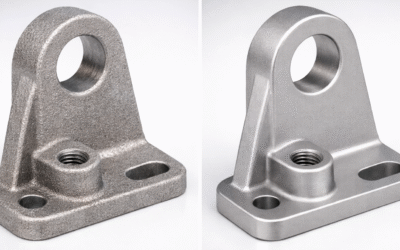
Unveiling the Magic of a Foundry
Have you ever held a metal object and wondered how it was made? From engine blocks to intricate sculptures, many metal parts begin their life in a foundry. A foundry is essentially a factory where metal is melted and poured into molds to create objects of various shapes and sizes. It’s an ancient art, but modern foundries use incredible technology to produce precise and strong components. Let’s take a simple journey through the fascinating process of metal casting.
Step 1: Designing the Part and Creating the Pattern
Every metal part starts with an idea and a design. Engineers use special computer software (CAD) to create a detailed 3D model of the part. Once the design is finalized, a pattern is made. This pattern is an exact replica of the finished metal part, but usually slightly larger to account for metal shrinkage during cooling. Patterns can be made from wood, plastic, or metal, and are crucial for creating the mold. In our company we use a wood pattern.
Step 2: Making the Mold
The mold is the heart of the casting process. It contains a cavity that will be filled with molten metal. Here’s how they are made:
Sand Preparation: Special sand (like silica sand) is mixed with a binder. For many industrial applications, furan resin is used as a binder because it allows the sand to harden chemically at room temperature, creating a very strong and precise mold. This is known as the “no-bake” process .
Mold Assembly: The pattern is placed inside a flask (a box-like frame), and the prepared sand mixture is packed around it. Once the sand hardens, the pattern is carefully removed, leaving behind a perfect cavity in the shape of the desired part. If the part has internal features, separate sand cores are made and placed inside the mold cavity.
Step 3: Melting the Metal
With the mold ready, the next step is to prepare the metal. Various types of metals, are melted in large furnace at extremely high temperatures. We use advanced induction furnace for precise temperature control and energy efficiency. The molten metal is carefully checked for its chemical composition to ensure it meets the required specifications. For the quality control, we use two analysis, CE Meter and Optical Emission Spectrometer in every batch to assure the required composition.
Step 4: Pouring the Molten Metal
Once the metal is at the correct temperature and composition, it is carefully poured into the mold cavity. This is a critical step that requires precision and speed to prevent defects. The molten metal flows through channels (called gates and risers) into the mold, filling every detail of the cavity.
Step 5: Cooling and Solidification
After pouring, the molten metal is left to cool and solidify inside the mold. As it cools, the metal shrinks, taking the exact shape of the mold cavity. The cooling process can take anywhere from minutes to hours, depending on the size and type of the casting. During this time, the metal transforms from a liquid to a solid state.
Step 6: Shakeout and Cleaning
Once the metal has solidified and cooled sufficiently, the casting is removed from the mold. This process, often called “shakeout,” involves breaking away the sand mold. The raw casting, still attached to the gates and risers (the channels through which the metal flowed), is then cleaned. Excess sand is removed, and the gates and risers are cut off. This stage often involves shot blasting to remove any remaining sand and achieve a cleaner surface.
Step 7: Finishing and Quality Control
The final steps involve refining the casting and ensuring it meets all quality standards. This can include:
Fettling: Grinding or machining to remove any rough edges or imperfections.
Heat Treatment: Applying heat to alter the metal’s properties, such as increasing its strength or ductility.
Machining: Further precision machining to achieve very tight tolerances or specific surface finishes.
Quality Inspection: Rigorous checks using advanced tools like ultrasonic testing, and 3D scanner to detect any internal or external defects and verify dimensional accuracy. This ensures that every part meets the highest standards.
The Art and Science of Metal Casting
From a simple design to a finished, high-precision metal component, the foundry process is a remarkable blend of art, science, and advanced engineering. Modern foundries, leveraging technologies like furan resin sand systems and automated controls, continue to push the boundaries of what’s possible in manufacturing. The next time you see a metal part, you’ll know the intricate journey it took to come to life!